


May 25, 2015 While most adults only attended school between September and May while growing up, many kids today take summer school classes to get ahead — or attend districts providing year-round programs. This means that school buses are transporting students year round in many parts of the country. While most bus drivers are conscientious, far too many still fall short and keep endangering children’s lives. Here’s a brief look at some recent school bus accidents, statistics telling us more about these events – and a list of suggestions for keeping your children safe while riding as passengers. Tragic school bus accidents in California and across the nation Earlier this year, a Northern California school bus accident briefly trapped six students on board. Last year, one teen sadly lost her twin in a chartered bus that was taking “dozens of Southern California high school students ” to visit a college some hoped to later attend. A total of ten (10) people died in that last crash involving a Fed Ex big rig. Just recently, a New York driver crashed a school bus with 35 kids aboard into a utility pole. What was the apparent cause of this side-swiping accident? “Troopers determined that [Mary] Coletti was operating the bus in an intoxicated condition — a subsequent breath test determined her blood-alcohol content to be 0.13% .” In the state of Kentucky, a small child was recently dragged by a school bus down a street after her backpack got caught in the door while she tried to exit. Since California made seatbelts mandatory for children riding school busses long ago, some concerned parents are wondering what else can be done to protect their kids? Here are some recent statistics that shed a bit more light on these dangerous crashes. Analyzing the statistics Between 2003 and 2012, one hundred and seventy-four “(174) school-age children died in school transportation- related crashes .” Of that number, fifty-five “(55) were occupants of school transportation vehicles and 119 were pedestrians ;” Each year, “eight (8) school-age pedestrians are killed by school transportation vehicles .” Another four die due to other vehicles involved in the school-bus related accidents; Between 2003 and 2012, “there were 89 crashes in which at least one occupant of a school transportation vehicle died. More than half of those (58%) involved at least one other vehicle ; As might be expected, the vast majority of the school buses accidents take place between 7 a.m. and 9 a.m. in the morning and 3 p.m. and 4 p.m. in the afternoon; When school bus fatalities occur, the bus is often hit in the front. Stated differently, “impacts to the front of school transportation vehicles occurred in 49 percent of fatal school-transportation- related crashes ;” Oddly enough, in terms of other routine accidents, most children struck by school buses [are] hit not when the buses [are] turning or making other odd maneuvers but when they [are] “ going straight .” How to improve your child’s safety Strict hiring practices /refresher training. Make sure your child’s school district conducts thorough background checks on all driver applicants — and requires frequent refresher training courses for those who are hired; Regular bus and tire maintenance checks. Always be sure the school bus company conducts regular safety checks; Seatbelts and handrails . Remind your children to use these during every ride. Handrails can protect them from falling when others may be shoving their way onto or off the bus. Seatbelts can often prevent major injuries during accidents; Behavior on the bus . Every child must visit quietly with others on the bus and never try to “bully” or upset other kids or the driver. They should also never push or shove others — or throw any objects at one another. Be sure to regularly review these bus riding guidelines with your kids; Consider authorizing school bus drivers to issue negative behavior reports. Parents need to know if their kids are misbehaving so they can be properly punished; Carefully warn your children how to walk around a bus that has stopped. They need to understand that they’ll often be walking in “blind spots” of the bus driver – and others passing by. Tell your kids to only cross at street corners or where a school crossing guard indicates. Jaywalking must never be allowed – too many children are killed doing this; Install and maintain video monitors on each school bus. These can help keep track of everyone’s behavior – including that of the driver. Be sure the bus company or school reviews these tapes daily. Elizabeth Smith is a freelance writer and graduate of the University of Texas Law School
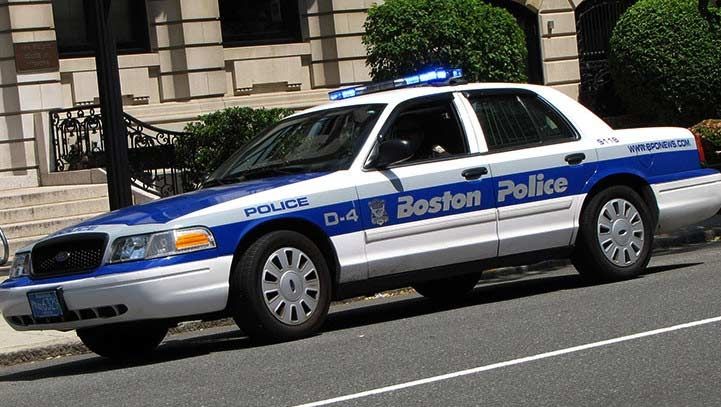
May 20, 2015 With charges of police brutality and racial profiling against minorities by law enforcement officers at the forefront of the news, the Boston Police Department has forked over more than $36 million in the past 10 years in court awards and out-of-court agreements in personal injury cases including civil rights violations and property damage. The city released the information on May 15, 2015, which indicated that $10.4 million in claims were paid in out-of-court settlements while about $25.6 million was awarded in court cases. Mayor Martin J. Walsh explained that nearly all of the cases happened prior to when he took office. Even so, the city is investigating any cases that were settled and the reasons behind these resolutions. He admitted that out-of-court settlements are sometimes necessary and can offer a better option than dragging a case through what can be a long and drawn-out process in the court system. City documents revealed that the largest settlement was in the case of an Emerson College co-ed. Victoria Snelgrove was killed during the 2004 celebration of the Red Sox victory, and her family received $5 million. Two other individuals, who were also present at the same victory celebration, suffered injuries and were given $325,000 and $250,000, respectively. The family of David Woodman, who was killed during the celebration of the 2009 Celtics basketball win, was awarded $3 million. DNA resulted in the exoneration of Anthony Powell after a wrongful conviction involving rape in 1992. He won $3.25 million in a civil lawsuit. The Boston Herald asked for the information due to the media attention on the racial tension between the police and local citizens. The names of Freddy Gray, Michael Brown and Eric Garner have been plastered across the news with the circumstances surrounding the deaths of each man hotly contested by many. During any type of personal injury lawsuit , including police brutality, you might wonder if you should settle out of court or litigate the case. Our personal injury attorney can provide you with additional counsel and review your options with you.
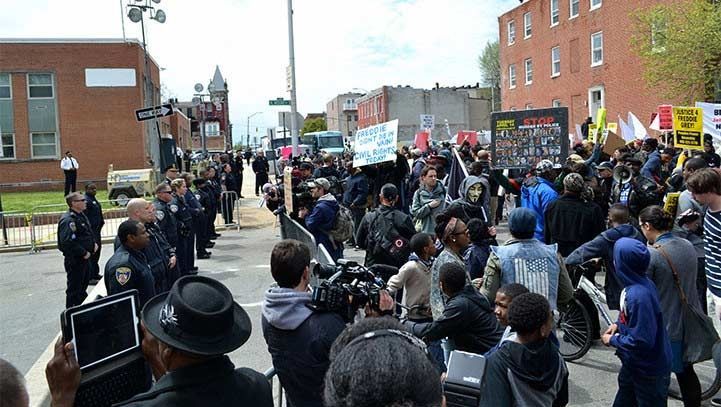
May 15, 2015 The death of Freddie Gray, 25, while in police custody touched off the Baltimore riots that held the nation’s attention for over a week. In the wake of rioting and mass protests, the city imposed a six-day curfew, during which time 486 people were arrested. Now that the fires are out and the curfew has been lifted, many have written off the event as a spasm of urban unrest and are moving on. But to the residents of Baltimore, the effects linger front and center in everyone’s minds. While workers and good Samaritans clear debris, unshutter storefronts and reopen Mondawmin Mall, one fact remains painfully clear: it’s not over. Not by a long shot. Here is what residents will endure for the foreseeable future. The neighborhood Freddie Gray called West Baltimore home, as do the residents of neighborhoods like Sandtown-Winchester/Harlem Park, 97% of whom are black. According to progressive think tank the Justice Policy Institute, the violent crime rate is 23 per 1,000 residents, which is six times the national average. More sobering is the 52% unemployment rate and the fact that only 25% of adults over 25 have a high-school diploma. To those of us on the outside, these are merely statistics. But those in Baltimore have to live it every day, and they will continue to do so long after the riots are supplanted in the minds of Middle Americans by the next trend in the 24-hour news cycle. The police Before creating the critically acclaimed HBO series “The Wire,” David Simon was a crime reporter in Baltimore for over a decade. In an interview with The Marshall Project , he describes a law-enforcement culture that for years disregarded probable cause, meting out “rough rides” and administering beatings almost indiscriminately. This is at least partially evident in the nearly $5.7 million the city has paid out in settlements since 2011 to victims of abuse at the hands of police. And while only the officers and Freddie Gray know what happened in the back of that police van, the fact that the latter isn’t alive to tell his side of the story supports the theory that, where it concerns the Baltimore Police Department, the more things change, the more they stay the same. The accused State’s Attorney Marilyn J. Mosby filed charges against Gray’s six arresting officers less than two weeks after the incident. Community members praised the move while the police union denounced it as a rush to judgment. The side of law enforcement may very well be right—but not for the reasons they think. Many legal experts acknowledge just how difficult it is to win a conviction against a police officer. Legally, they are not held to the same standards as, say, a plumber or carpenter or businessperson. It’s for these reasons charges are rarely filed against police officers after fatal encounters with suspects, and even rarer that a jury will convict them. So, rather than a moral victory, the charging of these officers could very well end up being a preamble to more pain, heartbreak and anger.

May 13, 2015 While professional athletes such as NFL players might demonstrate their talents on the field, many struggle with even basic money-management skills. They have focused on improving prowess in their sport of choice and as a result, have little understanding of basic finances. Often times they poured money into family and friends during their heyday when it seemed the money would never end, only to get bit when it inevitably did. Warren Sapp and Vince Young are just two examples of players whose names were recently splashed across the headlines when they filed bankruptcy. Sports Illustrated released data in 2009 that provided an estimate of how many NFL players face financial issues or even bankruptcy within two years of retirement. A staggering 78 percent of these professionals are struggling with joblessness or the breakup of their marriage. However, the National Bureau of Economic Research released new data in April 2015 that challenges that figure, claiming instead that less than 2 percent of former football professionals filed bankruptcy within two years of retirement . The study used all 2,016 players who were drafted from 1996 to 2003. Twelve years after leaving the field, less than 16 percent, or about one in six, filed for bankruptcy. The difference in the numbers was due to the inclusion of divorced and unemployed former NFL professionals in the statistics. Even if a player was doing well financially, they were lumped into the group. The NBER study, on the other hand, only counted Chapter 7 bankruptcies . In addition, the data only considers draft picks, which eliminated about 30 percent of all players in the league. If those individuals were added into the total, the percentage of bankruptcies would likely increase. Even so, the more recent data shows that NFL players probably do file bankruptcy more frequently than other people in the same age range. In addition, a person who hasn’t filed Chapter 7 could still end up destitute, especially if they have little debt. Another consideration is that many former players invest in business or take other significant financial risks, with about half of these men suffering a serious loss as a result. Various setbacks can lead a person to financial struggles, resulting in the need to file bankruptcy. Our bankruptcy attorney can review your case and provide counsel on your options.

According to the Los Angeles Times , L.A. attorneys have filed suit against California’s largest bank, Wells Fargo, alleging unlawful and fraudulent conduct regarding bank fees. To any person with a checking account that’s living paycheck to paycheck, the reality of dubious fees and hidden charges likely comes as no great surprise. But the problem is systemic and, sadly, only getting worse. In order to ensure bank customers’ pockets aren’t picked, they need to be on the lookout for all manner of chicanery. In the immediate, here are three things anyone can do to mitigate excess bank fees. Eschew overdraft protection At its inception, financial institutions created overdraft protection as a courtesy to protect against overdrawing a checking account. And that’s still how banks sell the service. However, since 2010, bank fees and insufficient fund charges have been going up, not down. And according to a report by the Consumer Financial Protection Bureau, involuntary account closures were 2.5 times more common with customers who signed up for debit and credit overdraft coverage. All evidence now suggests this service is more of a liability than a benefit, and the option should be taken off the table entirely. The financial pinch of not having account flexibility may be felt in the immediate for many low-income customers, but it prevents excess interest and fees over a protracted period of time. Maintain a minimum balance Easier said than done, right? But this is vital, especially for those who take the above step to heart and forgo overdraft protection. Also, most banks are (refreshingly) transparent about a common policy: maintaining a minimum balance in a checking account eliminates monthly charges. Linking a direct deposit to a checking account is another great way to avoid fees. Change institutions Losing money annually on excess fees can make folks lose faith in the traditional banking system altogether. Some financial experts are touting the benefits of shutting down that checking account and going full-cyber. And while there are obvious benefits to sites like PayPal, they, too, have had negative press regarding hidden fees . And nothing in the myriad negative Yelp reviews suggests Bank of the Internet is going to save the day anytime soon. The only sensible option, it seems, for those who can’t take their bank’s shenanigans anymore, is to make the switch and discover the benefits of a credit union . When looking closely at what the standard checking account is, it’s not difficult to see how we arrived here. Checking accounts were always a loss leader for financial institutions, and management used them as a springboard to push for bigger moneymakers like loans and mortgages. After the mortgage bubble burst in 2008, banks had to make up the difference elsewhere. Here’s hoping consumer advocacy groups and emboldened attorneys continue fighting the good fight to keep banks from becoming the financial predators they always promised they weren’t.

Learn the first steps in the divorce process with Larry Bellomo Attorney at Law in Mission Viejo, CA. Expert family law guidance—click to read our guide now.
January 28, 2018 According to an October 27, 2017, announcement, the Los Angeles jeans company, True Religion, exited Chapter 11 bankruptcy with about $357 million less debt, debt maturities extended, cash to implement a growth plan and a positive outlook for the future. The company emerges with a reduced retail footprint and an exit loan of $60 million from Citizens Bank, the same bank that provided the initial cash during the reorganization process. At the peak of the company, True Religion jeans were selling anywhere from $150 to $250 a pair at their nearly 140 stores and online. The brand also sold at upscale department stores, such as Bloomingdales, Saks Fifth Avenue and Nordstrom and at other locations in the U.S., Mexico and South America. Around 2013, True Religion, like many other apparel stores, struggled for success, watching sales decline as it competed with the internet, online shopping and competing discount retailers. The rapid growth in the trend of athletic wear for leisure caused the sales of blue jeans to quickly decline. Behind $192,000 on rent for its California office headquarters and drowning in major debts owed to creditors, manufacturers, U.S. Customs and Border Protection and malls around the country, True Religion filed for bankruptcy on July 5, 2017, in a U.S. Bankruptcy Court in Delaware. At the time of filing, the company had 128 stores in the United States and 11 stores outside the country. The company made some major changes, hiring John Ermatinger as CEO and president and bringing on a new chief marketing officer and a new vice president of sourcing. They also reduced costs, streamlined processes and closed unprofitable stores. John Ermatinger publicly thanked the company’s supporters — consumers, employees, vendors and suppliers — for their ongoing commitment and devotion to True Religion. He expressed his excitement regarding the future of the company, which includes implementing new growth strategies through innovative partnerships, expanding True Religion’s digital presence and refining its marketing operations. You do not have to be a major corporation to file bankruptcy , Like in the case of True Religion, bankruptcy allows individuals to emerge in a better financial position than before. Our legal team can help you navigate through these difficult times.
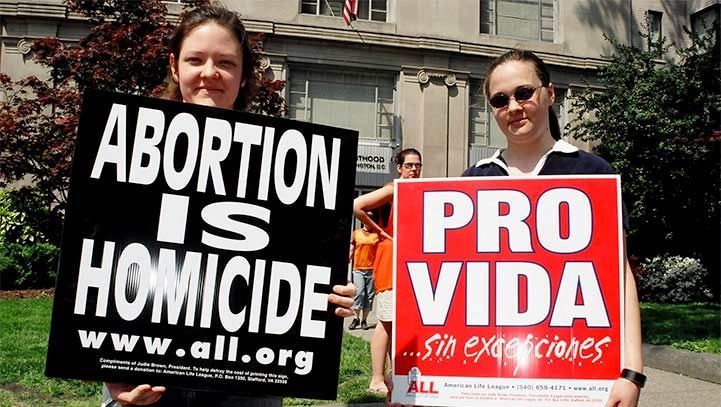
January 16, 2018 A Fresno State professor who intimidated a pro-life group was ordered to pay $17,000 and attend training on the First Amendment. He was recorded on video in an attempt to harass pro-life students who were drawing with chalk on the sidewalk. He also asked students from his public health class to assist him in his efforts. He claimed they were outside of the campus free speech area, but no such area has existed on campus since 2015. The sidewalk messages suggested pro-life options for students. The president of the club stated that the First Amendment gives students the right to speak on campus. She documented an incident between herself and the professor on video. He can be heard telling her that she is not in a free-speech area. However, she claimed that she had school permission to be there and to be speaking. The professor began erasing the sidewalk messages with his shoe. He told her that she did not understand the areas where free speech was permitted on campus. Alliance Defending Freedom acted as legal representation for the group, the Fresno State Students for Life. The professor must pay $1,000 to the president and $1,000 to another student as well as legal fees. However, he said that the money was paid by his insurance company, so he is not concerned about the legal fees. He does not admit to any wrong actions but is willing to attend the training so that he can learn the opinions and thoughts of others. The president expressed her relief that he will not be able to harass them again and explained that the case was not about winning money. She was extremely surprised at his actions, especially on a public campus. She further opined that professors should encourage and not prohibit free speech. Legal counsel for the pro-life group stated that the professor’s behavior flagrantly violated the First Amendment He added that school officials do not have the right to restrict freedom of speech on campus. The school did not comment about the case. If you believe that your First Amendment rights have been violated, you will need experienced legal representation to defend you. Contact us so that we can discuss your case.

January 5, 2018 The complexities of any divorce include dividing money, property and assets between both parties. While this might not be as complex for a millennial as it is for a couple who has spent their lifetime acquiring possessions, both types of divorce require finding a qualified family lawyer to deal with the personal issues. Legal experts report that stereotypes claim that other generations are more loyal than millennials who don’t really value traditions. She continues that even though they wait to marry, they still place a high priority on the institution. However, she added that they will not tough out a relationship the way their parents did. This by no means makes a divorce any easier for millennials. They feel just as hurt and disappointed as any others who divorce , but their outlook for the future tends to be more optimistic. Although marriage rates in the U.S. continue to decline, divorce rates are also dropping. Millennials delay marriage until later in life, placing an emphasis on education and careers before taking this significant life step. Millennials tend to be more open to diverse relationships, including living together. In the past, prenuptial agreements held a negative connotation as if one of the parties expected the marriage to end. The more-practical millennials, who prioritize acquiring and preserving wealth, see the prenup as a planning tool and communication map to manage financial expectations and interests. Creating a prenup with a lawyer realistically deals with the uncertainty of the future and helps a couple draft specific plans. Millennials choosing to live together instead of marrying can benefit from an attorney’s expertise when drawing up a cohabitation agreement, protecting both parties and their assets in case the relationship ends. When couples know the laws regarding cohabitation , marriage and divorce in their state, they tend to be ready for even unexpected contingencies. Whether a couple plans to cohabitate, marry or file for divorce, planning for a big relationship step helps the individuals prepare for the future, no matter what happens in the marriage. Consulting with a knowledgeable, experienced family lawyer sets up both parties for success.

December 23, 2017 The 32-year-old mother entered the high rise in downtown Memphis as a memory tugged at the far corners of her mind. Suddenly, it came to her. She had been in this very building with her own mother for the same purpose — to file bankruptcy . She anguished over the decision but a court order had recently enforced a judgement against her that allowed a company to seize a portion of her check. With her struggle to make ends meet, the judgment would put an unbearable strain on her already overburdened finances — the proverbial straw that broke the camel’s back. Despite the stigma, she decided that bankruptcy would stop the vicious cycle of juggling bills each month so that she could now start fresh. She even dreamed of becoming a homeowner one day. While the U.S. Bankruptcy Court for the Western District of Tennessee in Memphis funnels millions of dollars to the court, the lawyers and the creditors, the debtors for whom the entire system exists don’t fare so well. The clients are stuck in a vicious cycle. Most people choose to file Chapter 7, which allows the person to start over from square one without seizing any debts. In contrast, Chapter 13 requires monthly payments while stopping car repossessions and home foreclosures. This method is most common in the South and was what this mother chose. She didn’t understand the difference between the two. However, filers who opt for Chapter 13 must continue making payments for five full years. Most cannot even last 12 months under the program. These individuals went through each and every step of the bankruptcy — paying filing and legal fees and dealing with a seven-year blemish on their credit record — but do not ultimately benefit from the program. Once they have defaulted, they revert back to all unpaid debts with interest rates higher than ever. When comparing Caucasian filings with African-American filings, the latter usually file under Chapter 13 but cannot complete the program. Some return for repeat filings, with a few filing Chapter 13 up to 20 times during their lifetimes. They view bankruptcy as a last resort. If you are considering bankruptcy, talk to our knowledge attorneys about which options — Chapter 7 or Chapter 13 — is best for you.



