


Although this case may appear to be a straightforward defamation lawsuit, it’s based upon a very unique background. The surface facts of Dickinson v. Cosby involve celebrity model Janice Dickinson accusing actor/comedian Bill Cosby of defaming her after she claimed he raped her back in 1982. In her pleadings, Ms. Dickinson describes herself as “an internationally known fashion model, photographer and author, often called ‘the world’s first supermodel .’” She also notes that she’s frequently active in various media projects. The Bill Cosby she is suing is the actor/comedian still remembered for his acting roles on TV’s “I Spy” and “The Cosby Show” who still performs in public. Background Facts and Accusations Leading Up to This Case According to ABC News, comedian Hannibal Burgess performed a comedy routine in Philadelphia in October 2014 that referenced Bill Cosby as “a rapist.” Since that time, audio/video clips from that routine, often including various bits of commentary, have been viewed numerous times on the Internet. Those fairly new to the Dickinson lawsuit have recently been trying to learn more about Temple University employee Andrea Constand’s civil lawsuit against Bill Cosby for drugging and raping her back in 2004. The attorneys in that case had 13 witnesses ready to testify about alleged similar claims. Still others are reading about the accusations of Joan Tarshis , now in her late 60s, who alleges that Cosby abused her back in 1969. Perhaps the main reason this lawsuit has been filed is due to the defendant’s response to the plaintiff’s December 2014 CNN interview in which she strongly accused Mr. Cosby of raping her back in 1982 . Shortly thereafter, ETOnline states that Cosby’s lawyer refuted Ms. Dickinson’s claims by saying “Janice Dickinson’s story accusing Bill Cosby of rape is a lie .” Defamation is a Tort. What Must the Plaintiff Claim to Win? According to the Legal Information Institute, “Defamation is a statement that injures a third party’s reputation .” This reputable source further indicates that in order to win a defamation lawsuit, the plaintiff must prove four things: “(1) A false statement purporting to be fact; (2) publication or communication of that statement to a third person; (3) fault; and (4) damages, or some harm caused to the person or entity who is the subject of the statement .” Ms. Dickinson’s lawyers should be able to easily prove that the comment made by Mr. Cosby’s attorney claiming her accusations were “a lie” was widely disseminated throughout the media “to third persons” in late 2014. Likewise, the plaintiff’s ongoing activities in the media (referenced in her complaint ) should help prove that being branded a “liar” in the press might cause her serious future difficulties (“damages”) when trying to negotiate new contracts and projects. Since Ms. Dickinson is generally viewed as a “public figure,” the New York Times v. Sullivan standard requiring proof of some form of actual “malice” will likely apply. Proving this point may require strong advocacy by her lawyer. Hopefully, Ms. Dickinson’s stated desire for a jury trial will become a reality since this case involves extensive (alleged) ties to rape – a serious societal concern that many fail to ever address appropriately. Mr. Cosby Must Step Forward with the Integrity He Expects of Others Although many people in Hollywood started distancing themselves from Mr. Cosby after this scandal was reignited in late 2014, he still has many long-term fans who will be closely watching his every move. They are expecting a sincere openness and transparency as he seeks to defend himself. Surely he’ll work hard to rescue his reputation or “legacy” that some think can no longer be saved. Early indications are mixed since the media recently reported that Mr. Cosby’s lawyer has already moved to block the release of past documents which might provide critical insights into his claimed innocence. Furthermore, Bruce Castor’s comments to CNN are very troubling. He was the prosecutor in the Andrea Constand sexual assault case that Mr. Cosby chose to settle back in 2006. According to a November 2014 article , Castor “told CNN that he believed Cosby . . . lied to authorities ” about what happened in the Constand case. What the Public Deserves vs. What They May Actually Receive Given the fact that fewer than half of all criminals guilty of “forcible rape” are ever caught, arrested or charged for the crime, all women who make claims of rape deserve our respect, even when their pain and humiliation causes delays in their reports. Hopefully, Mr. Cosby and those defending him will bear that reality in mind as they come forward with proof to refute the current claims against him – both those regarding defamation and those pertaining to the underlying accusations of rape. America’s past decade has been painfully riddled with famous people claiming innocence regarding numerous crimes or gross improprieties – perhaps either due to some type of narcissism or denial — only to wind up letting the public down. Maybe this case will prove different – and Mr. Cosby will respectfully address the seriousness of all that’s being alleged. The unvarnished truth can prove very powerful. Surely Mr. Cosby’s remaining fans deserve a ready openness that will make it clear that he’s not the tragic figure depicted in Vanity Fair’s article back in February of 2015 . By Elizabeth Smith, freelance writer and graduate of the University of Texas Law School.

California’s record drought is so severe that Gov. Jerry Brown declared a state of emergency in January, and now halfway through the year the problem won’t abate. The situation is dire. And while such activities as drought shaming make for enjoyable spectator sports, they do little to solve the actual problem. Californians were hoping for a little respite in the form of the rainstorms that flooded Texas in May, but no such luck. So with no water from the heavens, it’s back to the drawing board to try and jerry-rig a man-made solution. The idea of the moment: direct potable reuse, or, as it is more commonly known, turning sewage into drinking water . Here’s everything you need to know about the process, including its benefits. (Yes, there are some.) How direct potable reuse works This is not a new technology. In fact, nonpotable reuse—the process of treating sewage for crop irrigation or maintaining parks—has been in use for a while. Through a three-step filtration process, it’s possible to purify wastewater taken from treatment plants. The result, advocates say, is H20 that is more pure than many bottled waters. But it’s doubtful the positive results will satisfy those with weak stomachs. The benefits While “toilet to tap” (a term coined by opponents of the plan), may not have the same ring to it as “farm to table,” its proponents in California and elsewhere are serious about its benefits. The biggest drawback to the method, of course, is what’s called the “yuck factor.” Regular folks simply can’t wrap their minds around drinking water that comes from sewage, and who can blame them? However, this process was implemented to successful effect in parched Namibia and in certain drought-prone Texas cities like Wichita Falls. The likelihood of potable reuse as a drought solution in California This current drought season isn’t the first time the idea of potable reuse has come up in California. People were proposing it as early as 1994, and the idea was torpedoed for the obvious reason: people thought it was too gross. Those who are still sickened by the thought needn’t worry—there are plenty of opponents today as there were in the ‘90s, so any implementation faces a huge uphill battle. In the end, what’s obvious is that direct potable reuse is more than just a yucky idea dreamt up by a fetishist; it has proven benefits. That begs the question that if California can work up a solution to purifying what’s in the toilet via a complex filtration process, what, exactly, is stopping its 11 desalination plants from effectively purifying seawater?

June 9, 2015 With the national conversation focusing on such prickly topics as wealth inequality, it wasn’t long before legislators started seriously considered upping the minimum wage. Since 2009, the federal minimum has been set at $7.25, and no one who lives in any major U.S. metropolis regards this as a livable wage. Dealing with this reality, the central question became not just to up the minimum, but to how much. This decision fell to the cities, and Seattle led the charge with their plan to raise the minimum to $15 an hour over time. (In April they made the first adjustment, to $11 an hour.) Cut to California. In late April, Los Angeles’ city council passed a measure to up the minimum to $15 by 2020, and they’ve tied this wage to inflation. This means many things to many business sectors, but for now let’s focus on one vital industry: the restaurant business. Los Angeles has one of the richest dining scenes in the country, offering everything from high-end eateries to street food stalls. Here are three factors that should be impacted by the wage increase. Food costs Not so surprisingly, many in the southland are looking north to see what the practical impact on the restaurant industry is. One thing is clear: there has been a fundamental shift in how restaurants offset the minimum wage hike. Employers in Seattle are making dramatic changes, and an increase in menu prices now seems to be the norm. Los Angeles can expect to see restaurants charging more for plates of food, too. How eager employers are to tweaking their price margins depends on how much they support the wage hike. Staff/hours As Seattle has proved, hours are going to be cut in the L.A. restaurant industry. It isn’t just staff schedules in question, either; business hours will be affected as well. Look for many employers to trim workers hours as well as to open later and close earlier. Having said that, the cry from far-right conservatives that the Seattle hike is decimating local eateries is a falsehood . Hours may be cut, to be sure, but don’t count on the wage increase directly putting anyone out of business. The restaurant industry in places like Seattle and Los Angeles will always be competitive. Tipping The pages of major L.A. papers are now filled with columnists criticizing the act of tipping. Getting rid of tipping altogether, as some suggest, seems an untenable and draconian solution, since tipping is so embedded in the American culture. However, restaurateurs faced with a dramatic rise in the minimum wage have found creative compromises. For example, many are including the gratuity in the bill and listing it as a “service” charge. Some employers are even spreading this charge around so the kitchen staff as well as the wait staff gets a kickback. Only those who viewed the raising of the minimum wage through the rosiest of rose-colored glasses ever thought it would come off without a hitch. What Seattle serves to illustrate to Angelinos, though, is that arriving at livable wages for fair work will be a protracted process that will require flexibility and compromises on both sides.

Learn the first steps in the divorce process with Larry Bellomo Attorney at Law in Mission Viejo, CA. Expert family law guidance—click to read our guide now.
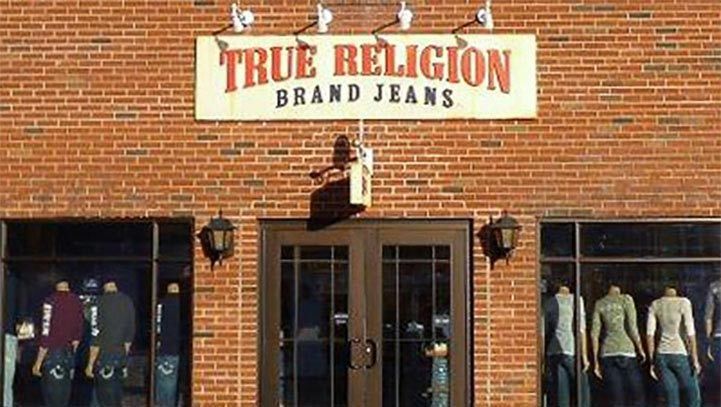
January 28, 2018 According to an October 27, 2017, announcement, the Los Angeles jeans company, True Religion, exited Chapter 11 bankruptcy with about $357 million less debt, debt maturities extended, cash to implement a growth plan and a positive outlook for the future. The company emerges with a reduced retail footprint and an exit loan of $60 million from Citizens Bank, the same bank that provided the initial cash during the reorganization process. At the peak of the company, True Religion jeans were selling anywhere from $150 to $250 a pair at their nearly 140 stores and online. The brand also sold at upscale department stores, such as Bloomingdales, Saks Fifth Avenue and Nordstrom and at other locations in the U.S., Mexico and South America. Around 2013, True Religion, like many other apparel stores, struggled for success, watching sales decline as it competed with the internet, online shopping and competing discount retailers. The rapid growth in the trend of athletic wear for leisure caused the sales of blue jeans to quickly decline. Behind $192,000 on rent for its California office headquarters and drowning in major debts owed to creditors, manufacturers, U.S. Customs and Border Protection and malls around the country, True Religion filed for bankruptcy on July 5, 2017, in a U.S. Bankruptcy Court in Delaware. At the time of filing, the company had 128 stores in the United States and 11 stores outside the country. The company made some major changes, hiring John Ermatinger as CEO and president and bringing on a new chief marketing officer and a new vice president of sourcing. They also reduced costs, streamlined processes and closed unprofitable stores. John Ermatinger publicly thanked the company’s supporters — consumers, employees, vendors and suppliers — for their ongoing commitment and devotion to True Religion. He expressed his excitement regarding the future of the company, which includes implementing new growth strategies through innovative partnerships, expanding True Religion’s digital presence and refining its marketing operations. You do not have to be a major corporation to file bankruptcy , Like in the case of True Religion, bankruptcy allows individuals to emerge in a better financial position than before. Our legal team can help you navigate through these difficult times.
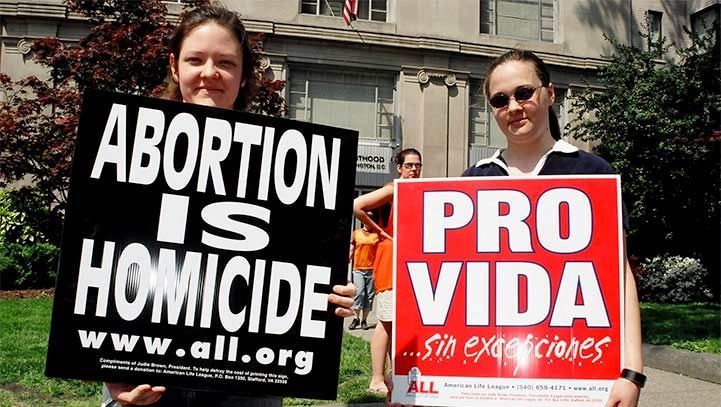
January 16, 2018 A Fresno State professor who intimidated a pro-life group was ordered to pay $17,000 and attend training on the First Amendment. He was recorded on video in an attempt to harass pro-life students who were drawing with chalk on the sidewalk. He also asked students from his public health class to assist him in his efforts. He claimed they were outside of the campus free speech area, but no such area has existed on campus since 2015. The sidewalk messages suggested pro-life options for students. The president of the club stated that the First Amendment gives students the right to speak on campus. She documented an incident between herself and the professor on video. He can be heard telling her that she is not in a free-speech area. However, she claimed that she had school permission to be there and to be speaking. The professor began erasing the sidewalk messages with his shoe. He told her that she did not understand the areas where free speech was permitted on campus. Alliance Defending Freedom acted as legal representation for the group, the Fresno State Students for Life. The professor must pay $1,000 to the president and $1,000 to another student as well as legal fees. However, he said that the money was paid by his insurance company, so he is not concerned about the legal fees. He does not admit to any wrong actions but is willing to attend the training so that he can learn the opinions and thoughts of others. The president expressed her relief that he will not be able to harass them again and explained that the case was not about winning money. She was extremely surprised at his actions, especially on a public campus. She further opined that professors should encourage and not prohibit free speech. Legal counsel for the pro-life group stated that the professor’s behavior flagrantly violated the First Amendment He added that school officials do not have the right to restrict freedom of speech on campus. The school did not comment about the case. If you believe that your First Amendment rights have been violated, you will need experienced legal representation to defend you. Contact us so that we can discuss your case.

January 5, 2018 The complexities of any divorce include dividing money, property and assets between both parties. While this might not be as complex for a millennial as it is for a couple who has spent their lifetime acquiring possessions, both types of divorce require finding a qualified family lawyer to deal with the personal issues. Legal experts report that stereotypes claim that other generations are more loyal than millennials who don’t really value traditions. She continues that even though they wait to marry, they still place a high priority on the institution. However, she added that they will not tough out a relationship the way their parents did. This by no means makes a divorce any easier for millennials. They feel just as hurt and disappointed as any others who divorce , but their outlook for the future tends to be more optimistic. Although marriage rates in the U.S. continue to decline, divorce rates are also dropping. Millennials delay marriage until later in life, placing an emphasis on education and careers before taking this significant life step. Millennials tend to be more open to diverse relationships, including living together. In the past, prenuptial agreements held a negative connotation as if one of the parties expected the marriage to end. The more-practical millennials, who prioritize acquiring and preserving wealth, see the prenup as a planning tool and communication map to manage financial expectations and interests. Creating a prenup with a lawyer realistically deals with the uncertainty of the future and helps a couple draft specific plans. Millennials choosing to live together instead of marrying can benefit from an attorney’s expertise when drawing up a cohabitation agreement, protecting both parties and their assets in case the relationship ends. When couples know the laws regarding cohabitation , marriage and divorce in their state, they tend to be ready for even unexpected contingencies. Whether a couple plans to cohabitate, marry or file for divorce, planning for a big relationship step helps the individuals prepare for the future, no matter what happens in the marriage. Consulting with a knowledgeable, experienced family lawyer sets up both parties for success.

December 23, 2017 The 32-year-old mother entered the high rise in downtown Memphis as a memory tugged at the far corners of her mind. Suddenly, it came to her. She had been in this very building with her own mother for the same purpose — to file bankruptcy . She anguished over the decision but a court order had recently enforced a judgement against her that allowed a company to seize a portion of her check. With her struggle to make ends meet, the judgment would put an unbearable strain on her already overburdened finances — the proverbial straw that broke the camel’s back. Despite the stigma, she decided that bankruptcy would stop the vicious cycle of juggling bills each month so that she could now start fresh. She even dreamed of becoming a homeowner one day. While the U.S. Bankruptcy Court for the Western District of Tennessee in Memphis funnels millions of dollars to the court, the lawyers and the creditors, the debtors for whom the entire system exists don’t fare so well. The clients are stuck in a vicious cycle. Most people choose to file Chapter 7, which allows the person to start over from square one without seizing any debts. In contrast, Chapter 13 requires monthly payments while stopping car repossessions and home foreclosures. This method is most common in the South and was what this mother chose. She didn’t understand the difference between the two. However, filers who opt for Chapter 13 must continue making payments for five full years. Most cannot even last 12 months under the program. These individuals went through each and every step of the bankruptcy — paying filing and legal fees and dealing with a seven-year blemish on their credit record — but do not ultimately benefit from the program. Once they have defaulted, they revert back to all unpaid debts with interest rates higher than ever. When comparing Caucasian filings with African-American filings, the latter usually file under Chapter 13 but cannot complete the program. Some return for repeat filings, with a few filing Chapter 13 up to 20 times during their lifetimes. They view bankruptcy as a last resort. If you are considering bankruptcy, talk to our knowledge attorneys about which options — Chapter 7 or Chapter 13 — is best for you.



